It's Yer Choice: Teaching Your Dog Self-Control Without Saying a Word
 Jennifer Hirakawa
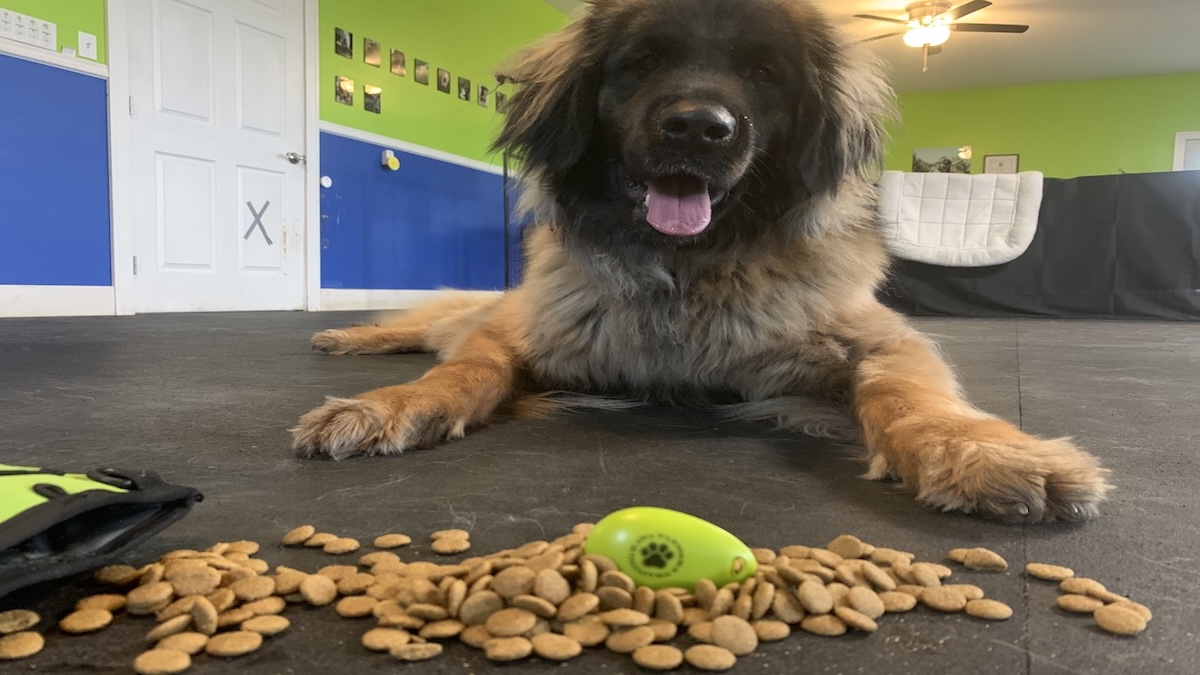
The It's Yer Choice game was created Susan Garrett of Say Yes Dog Training. This explanation is written for Kawa Farm K9 Training Clients
It's Yer Choice: Teaching Your Dog Self-Control Without Saying a Word
Most owners run into the same wall sooner or later. The dog bolts through the door, mugs your hand for the treat, hoovers up whatever hits the kitchen floor, or loses his mind the second a visitor walks in. The instinct is to manage it — to say leave it, to body-block the door, to hold the dog back. And it works, sort of, as long as you're there to do it.
There's a different way to think about the problem, and it comes from a game called It's Yer Choice, popularized by agility trainer Susan Garrett. Rather than teaching the dog to wait for a command, it teaches the dog to make a better decision on his own — because doing so is what gets him what he wants. At Kawa Farms, it's one of the first things we build with almost every dog who comes through, because the self-control it creates carries into everything else.
The Idea Behind the Game
Here's the shift in thinking. When you tell a dog "leave it" as he's lunging at a dropped chicken nugget, you've cued him in the middle of lunging — and whatever happens next can end up reinforcing that exact moment of wanting. You also become a required part of the equation. The dog only "leaves it" because you were there, fast enough, to say so.
It's Yer Choice flips that. Instead of policing the dog, you arrange things so the dog's own choice produces the outcome. Reach for the food and the opportunity disappears. Hold back, and good things happen. You're not controlling the dog — you're controlling the consequences, and then letting the dog do the learning. Over enough reps, the dog stops needing a cue at all, because restraint has quietly become his default. That's the whole point: a dog who chooses self-control on his own, even when you're not saying anything.
How the Game Builds, Step by Step
The game starts ridiculously simple and gets harder only as the dog succeeds. Resist the urge to rush — every level needs to be solid before you move up.
1. The Closed Hand
Put a few treats in your palm and close your fist around them. Hold your hand down at the dog's nose level, not up high where he can't reach it — the goal is to let him try, not to hide the food from him. Now say nothing and do nothing. He'll lick, nibble, paw, and shove at your hand to get in. Just wait, fist closed like a clam.
The instant he gives up and pulls his head back, mark it ("yes!") and reward him — but reward from your other hand, not the hand he was attacking. That detail matters. You never want diving at the hand to be the thing that pays off.
2. The Open Hand
When he's reliably backing off the closed fist, open your palm flat with the treats sitting right there in the open. If he goes for them, simply close your hand again. When he holds back from an open, exposed handful of food, mark and reward. Then make it harder — move the hand around, lower it, shift positions.
3. Food on the Floor
Now the food comes off your hand entirely. Set a treat on the floor, with your hand or foot ready to cover it the instant he goes for it. Uncover it and reward the moment he chooses to hold back. This is a real step up, because the food is no longer attached to you — it's just sitting there in the open, and the dog has to make the right call about something that isn't in your control anymore. Build duration and distance here before adding any motion.
4. Rolling the Treat
Now we add the thing that makes this hard: movement. Roll a treat across the floor so it's moving. A treat that moves is a completely different challenge than one sitting still, because motion taps straight into a dog's instinct to chase. A dog who holds beautifully on a static treat will often break the moment it rolls. Cover it with your hand or foot if he dives, and reward the choice to hold back.
5. Dropping From Above
The toughest version: hold a treat up and let it drop past the dog's face to the floor. Falling food, right by the mouth, is about as hard as it gets — and it's also exactly how food behaves in real life when it spills off a counter or out of your hand. The dog learning not to snatch it out of the air is the gold standard of impulse control.
Across all of these, build in the same order you'd build any skill: first distraction, then duration (a few seconds of waiting, then longer), then distance.
Taking It Into the Real World
The hand-and-floor games are just the foundation. Once a dog understands the rule — the way to get the thing is to not grab at the thing — you can apply it to almost anything he values: toys, the food bowl, the door he wants to charge through, the leash clip before a walk, even greeting a person he's dying to jump on. The principle never changes. You control access to whatever the dog wants, and you reward the choice that earns it.
This is where the game earns its keep for the dogs we see most. Excitement at the door, pulling toward another dog, jumping on guests — these are all the same underlying skill: staying composed while something exciting is moving or happening. The still versions of the game teach the concept, but the moving versions (rolling and dropping) are what build a dog who can actually keep it together when the real world gets loud.
A Few Things to Watch For
- Stay quiet. No "leave it," no "no," no chatter. The moment you add a cue, you've turned it back into a command instead of a choice, and you've lost the whole benefit.
- Reward away from the temptation. Feeding from the hand the dog was mugging just teaches him to mug harder.
- Don't yank the food away. Pulling your hand back turns it into a chase-and-grab game.
- Go at the dog's pace. With some dogs — especially intense, easily frustrated ones — pushing too fast can tip into frustration. Keep sessions short and end on a win.
- It plays nicely with your other cues. This doesn't undo a separate "take it" or "drop" cue. Those get layered on top once the default of self-control is in place.
The Bottom Line
It's Yer Choice isn't really about food or doors or any one situation. It's about handing the dog a little decision, over and over, until making the calm, patient choice becomes who he is. That's a far stronger foundation than a dog who only behaves when someone's watching and ready to issue a command.
If you'd like help getting started with this — or you've got a dog whose excitement is running the show — that's exactly the kind of work we do here at Kawa Farms K-9 Training. Reach out and we'll build a plan that fits your dog.
The It's Yer Choice game was created and popularized by Susan Garrett of Say Yes Dog Training. The explanation above is our own, written for Kawa Farms K-9 Training clients.
Categories: : Dog Training